Choosing the Right Orchestration for Your Workflow
Purpose-built workflows for every document type, decision, and handoff across biopharma technical operations.
Suraj Palaparty8 min read
Biopharma teams have spent decades refining how they work: how they investigate deviations, how they transfer processes between sites, how they prepare regulatory submissions, and how they maintain quality systems across products and lifecycles. That expertise shouldn't have to be re-taught, re-explained, or re-built every time it's needed.
Orchestrations capture that familiar, repeated work and structure it into purpose-built, repeatable flows organized around the core pillars of biopharma technical operations. Instead of falling back on a general-purpose tool repurposed for a nuanced, regulation-driven task — where every session starts from zero — Sofie allows teams to embed their standards, their terminology, and their ways of working directly into orchestrations that produce consistent, structured first drafts faster that are ready for review, refinement, and the expert judgment that turns a generated document into a finalized one.
Below are the four core pillars of how orchestrations are structured, what you need for each and how each can be incorporated in your workflows.
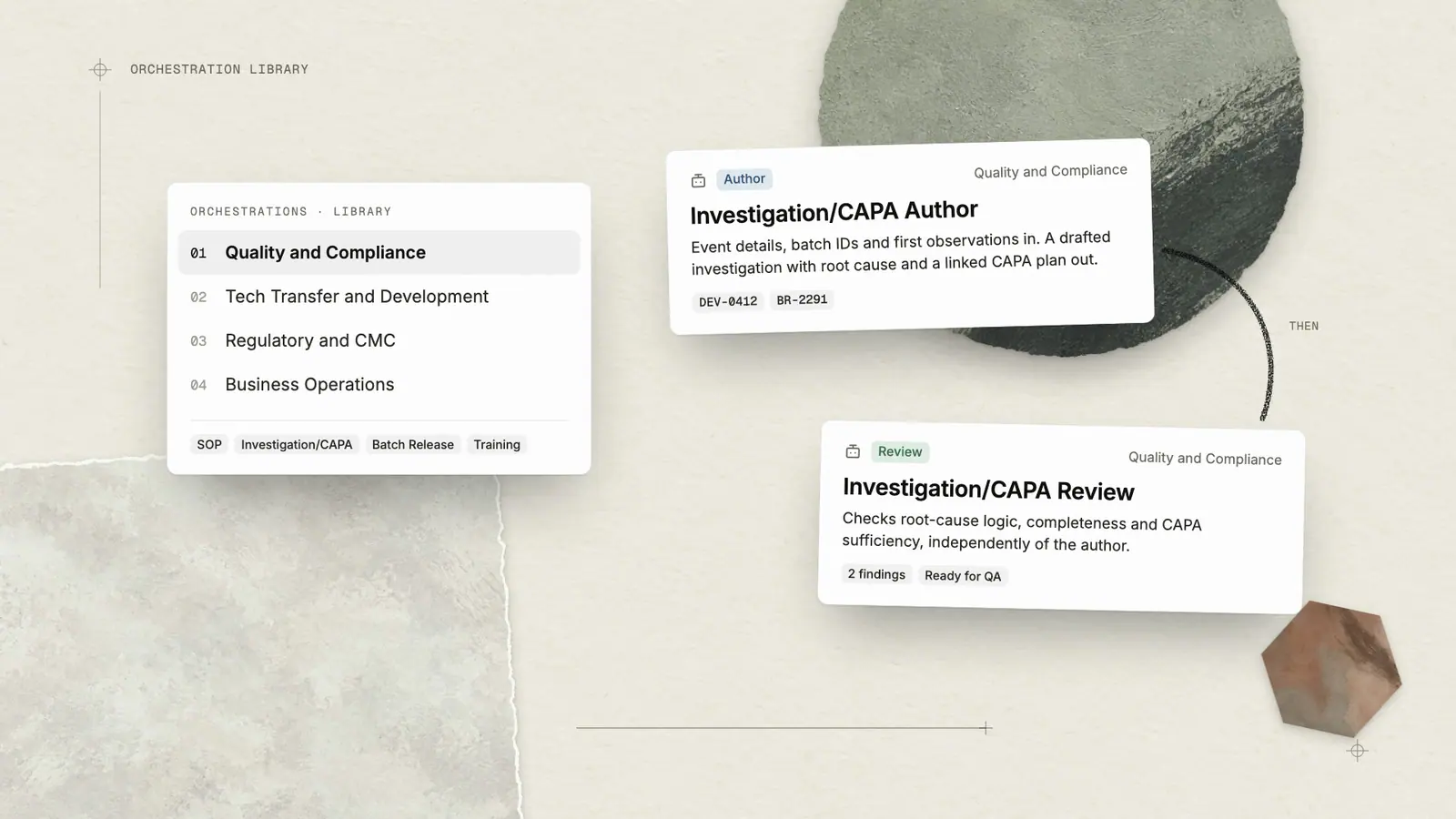
A note on pairing: most pillars include both an Author and a Review orchestration. Author orchestrations generate first-draft documents from your source data. Review orchestrations independently assess an existing document against regulatory standards and technical accuracy. They are designed to be used in sequence: run Author first, then Review on the output.
1. Quality and Compliance
Quality system documentation is the backbone of GMP operations. It's also where teams spend the most time writing, reviewing, and revising under the highest level of scrutiny. Deviations, CAPAs, change controls, SOPs: these are the documents pulled first during an audit and examined line-by-line during an inspection.
This pillar covers the document types that carry that weight. Each orchestration is built to get teams to a strong, consistent, review-ready output at scale, while preserving the precision and traceability that regulators expect at the record level.
SOP Author
Provide the process scope, applicable regulatory requirements, and any reference procedures. Sofie drafts a GMP-compliant standard operating procedure with purpose, numbered steps, and a responsibility matrix. Output is a structured SOP ready for SME review and approval routing.
SOP Review
Upload a draft SOP for quality and regulatory compliance review. Sofie evaluates the document against GxP standards, ICH guidance, and site-specific formatting requirements. Gaps, inconsistencies, and required revisions are returned as a structured review package.
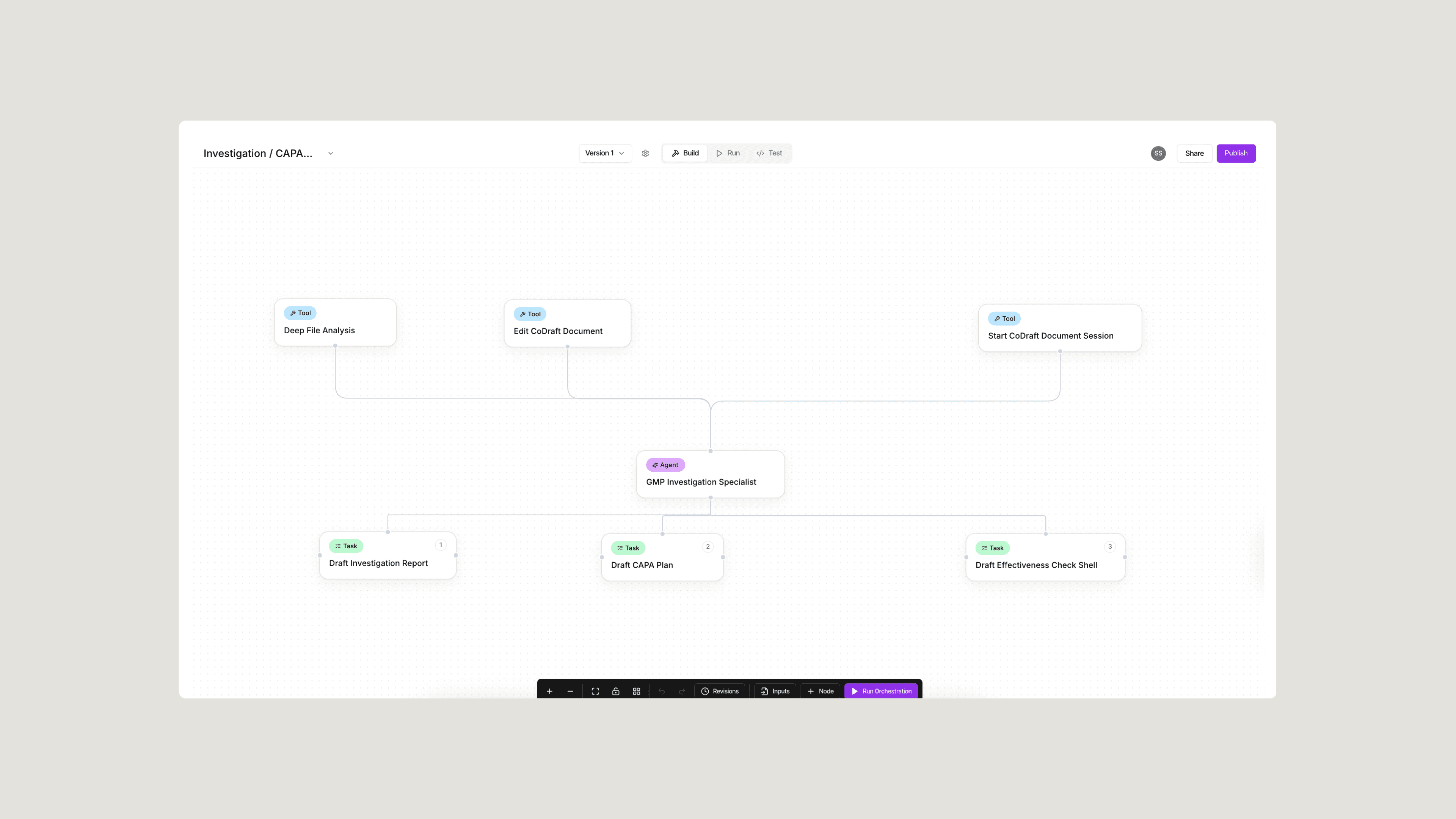
Investigation/CAPA Author
Enter the event details, batch identifiers, and initial observations. Sofie runs parallel analysis across SOP history, batch records, and regulatory precedent to structure a complete investigation. Output is a drafted report with root cause analysis and a linked CAPA plan.
Investigation/CAPA Review
Upload a drafted investigation or CAPA for independent quality review. Sofie assesses completeness, root cause logic, regulatory alignment, and action item sufficiency. Findings are returned as actionable review comments with a readiness determination.
Batch Release Author
Gather the batch record data, in-process results, and release specifications before running. Sofie compiles and evaluates the batch disposition package against release criteria and historical performance. Output is a structured batch release record with disposition summary and supporting rationale.
Batch Release Review
Upload a batch release package for independent quality review. Sofie cross-references results against specifications, release criteria, and prior batch data. Review findings are returned with a clear disposition recommendation.
Training Author
Share the SOP, process description, or competency requirements for the training program. Sofie structures a GMP-compliant training document with learning objectives, content sections, and assessment criteria. Output is ready for SME review and LMS upload.
Training Review
Upload a training document for compliance and content accuracy review. Sofie evaluates alignment with source SOPs, regulatory expectations, and learning objective completeness. Gaps and revisions are returned as a structured review summary.
URS Author
Provide the equipment function, process requirements, and applicable regulatory standards. Sofie drafts a User Requirements Specification aligned with GAMP 5 and GMP expectations. Output is a traceable URS ready for engineering and quality review.
URS Review
Upload a User Requirements Specification for quality and compliance review. Sofie checks traceability, completeness, and alignment with regulatory and process requirements. Review findings are returned with a gap summary and recommended revisions.
DQ Author
Share the equipment specifications, vendor documentation, and URS for Design Qualification. Sofie drafts a DQ protocol that maps design elements to user requirements and regulatory standards. Output is a structured DQ package ready for approval.
DQ Review
Upload a Design Qualification protocol for compliance review. Sofie evaluates traceability to URS, regulatory alignment, and documentation completeness. Review comments and a readiness assessment are returned for SME disposition.
IQ/OQ/PQ Author
Provide the equipment details, process parameters, and qualification scope. Sofie drafts Installation, Operational, and Performance Qualification protocols aligned with GMP and site validation standards. Output covers all three phases with linked acceptance criteria.
IQ/OQ/PQ Review
Upload qualification protocols for IQ, OQ, or PQ review. Sofie evaluates acceptance criteria, test coverage, and traceability to URS and DQ requirements. Review findings are returned as a structured quality assessment with approval readiness.
2. Technology Transfer and Development
Tech transfer is where the most time is lost and the most risk concentrates — knowledge gaps, undocumented expertise, and acceptance criteria that don't survive the move between sites. This pillar covers the high-stakes documents tied directly to product release and regulatory compliance, and the strategic handoffs required to move knowledge seamlessly from development to clinical, site-to-site, and CDMO onboarding.
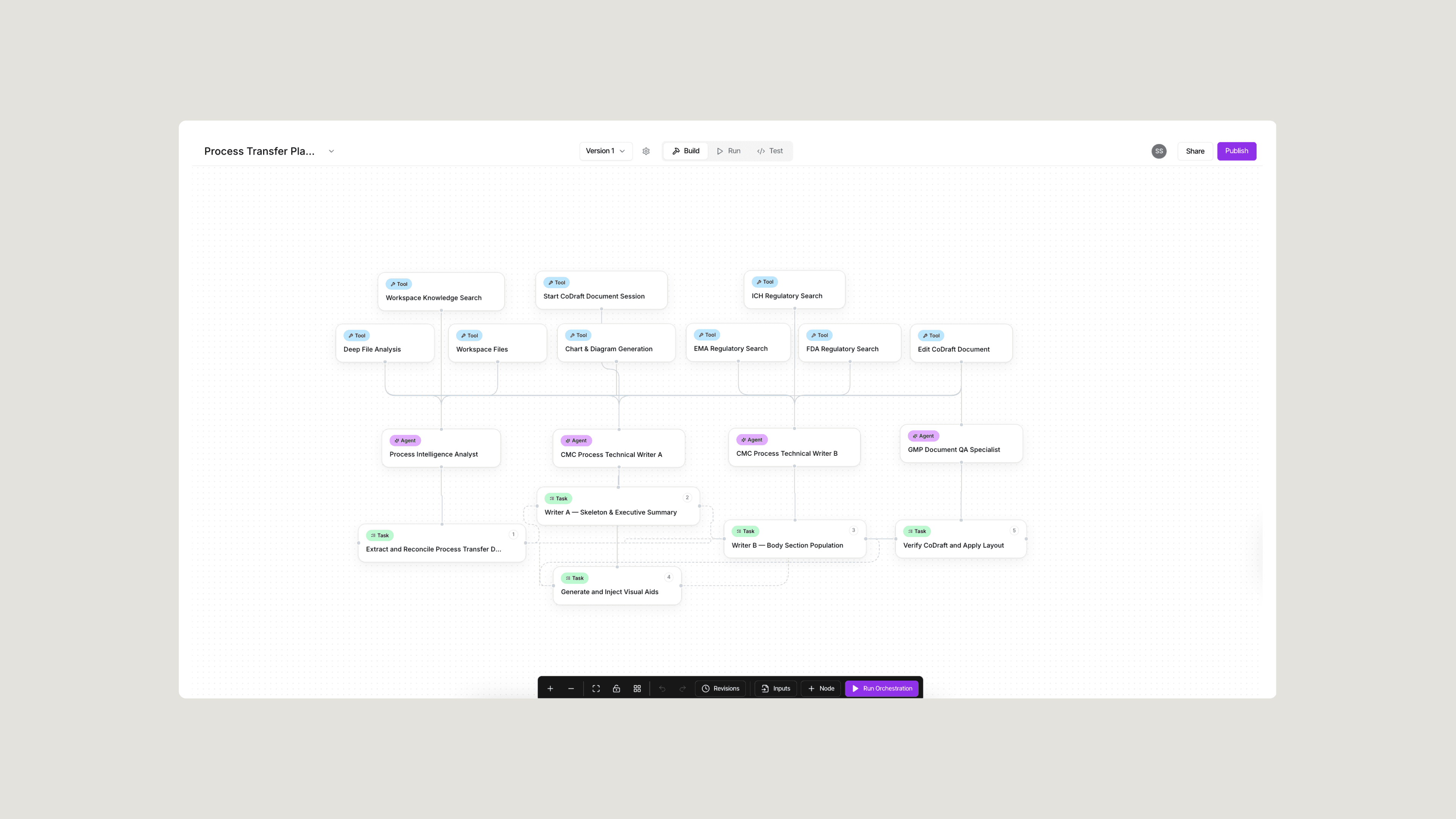
Process Transfer Plan Author
Provide the sending site process summary, CPPs, CQAs, and transfer objectives. Sofie drafts a process technology transfer plan with gap analysis, risk identification, and comparative study design. Output is a structured plan aligned with ICH Q10 and regulatory expectations.
Analytical Transfer Plan Author
Share the analytical methods, performance criteria, and transfer scope between sites. Sofie drafts an analytical technology transfer plan covering method comparability, acceptance criteria, and study design. Output follows ICH Q2 guidance and regulatory best practice.
Process Development Plan Author
Provide the molecule profile, development stage, and target process parameters. Sofie drafts a process development plan with defined objectives, experimental design, and regulatory alignment. Output is ready for team review and CMC filing support.
Process Development Summary Author
Supply the development study data, parameter ranges, and scale-up observations. Sofie drafts a process development summary that connects experimental findings to process understanding and regulatory narrative. Output supports CMC filing and tech transfer readiness.
Analytical Development Plan Author
Provide the product characteristics, analytical method requirements, and development objectives. Sofie drafts an analytical development plan with method rationale, ICH-aligned strategy, and testing milestones. Output is structured for both internal review and regulatory use.
Analytical Development Summary Author
Share the analytical study data, method performance results, and development history. Sofie drafts a summary that translates raw results into a regulatory-ready narrative supporting method validation and CTD filing. Output is aligned with ICH Q2 and Q14.
3. Regulatory and CMC
Regulatory submissions and agency responses are where scientific rigor meets regulatory strategy. Every CTD section, every response to a technical question, every guideline interpretation carries weight. This pillar covers orchestrations that support CMC documentation and regulatory interactions. Each one is built to get teams to a structured, defensible draft faster — so the time goes to scientific judgment, not document assembly.
RTQ Author
Provide the agency question, relevant CMC data, and applicable regulatory context. Sofie drafts a structured response with cited data, regulatory alignment, and a clear scientific rationale. Output is a defensible RTQ ready for regulatory review and submission.
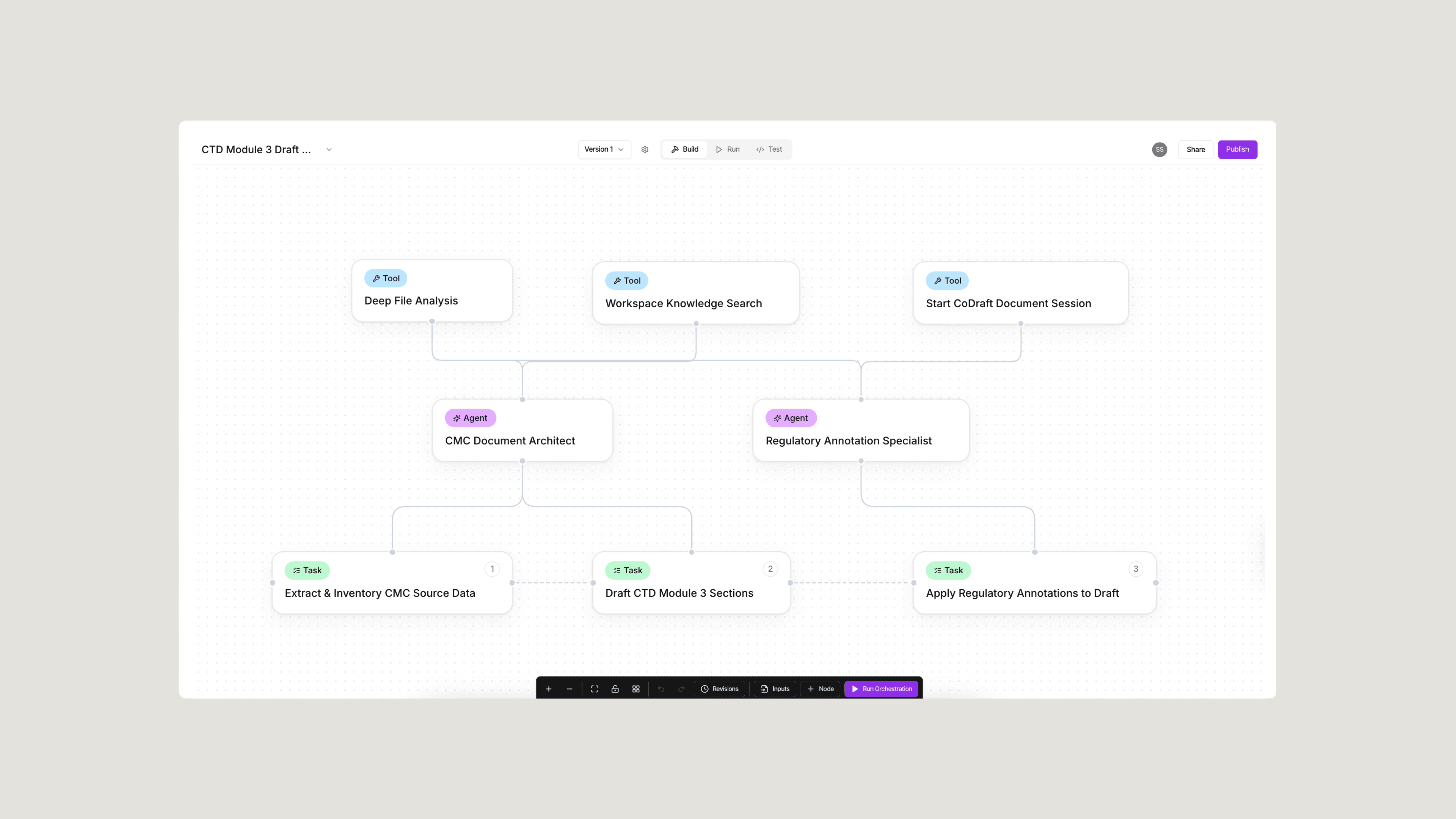
CTD Module 3 Drafter
Share the CMC data package, product description, and manufacturing details. Sofie drafts CTD Module 3 sections with appropriate structure, narrative, and regulatory language. Output is formatted for direct integration into a submission dossier.
Quality Regulatory Review
Upload CMC documentation or regulatory submission drafts. Sofie analyzes content against FDA, EMA, ICH, and applicable health authority guidance, evaluating technical accuracy, completeness, and regulatory defensibility. Output is a structured review report with findings and submission recommendations.
4. Business Operations
The commercial and operational side of biopharma runs on documents: proposals, cost models, audit prep, change strategies, facility plans. These directly shape revenue timelines, client relationships, and strategic decisions. This pillar covers the document types that support business development, operational planning, and cross-functional decision-making. Each one is built to get teams from blank page to structured deliverable faster — so the time goes into judgment calls, not document assembly.
SOW Author
Provide the project scope, deliverables, timelines, and client or partner details. Sofie drafts a professional scope of work with defined milestones, responsibilities, and pricing structure. Output is a client-ready SOW aligned with GMP project standards.
SOW Review
Upload a scope of work for compliance and commercial review. Sofie evaluates scope clarity, deliverable alignment, regulatory obligations, and contractual completeness. Gaps and recommended revisions are returned as a structured review summary.
GMP Facility Proposal Author
Share the facility requirements, project objectives, and applicable regulatory standards. Sofie drafts a GMP facility proposal covering design considerations, CQV approach, and regulatory alignment. Output is a structured proposal ready for client or internal review.
PM Dashboard Generator
Input the project milestones, workstreams, owners, and current status data. Sofie generates a structured project management dashboard with timeline tracking, risk flags, and priority actions. Output is ready for leadership review and cross-functional alignment.
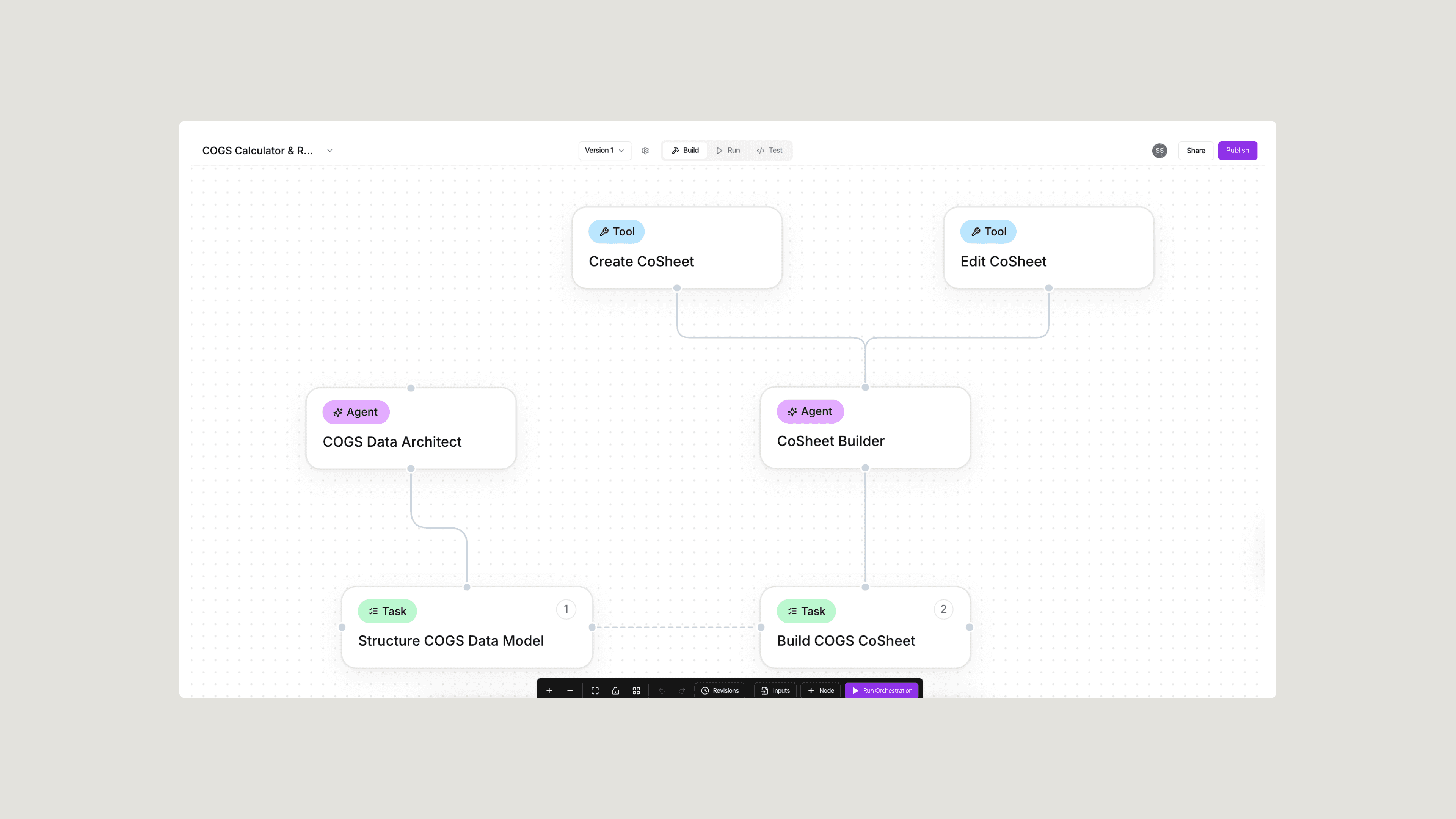
COGS Modeler
Provide the manufacturing parameters, batch size, raw material costs, and labor inputs. Sofie models cost of goods across production scenarios with sensitivity analysis and key cost drivers identified. Output supports pricing decisions, operational planning, and investor reporting.
Change Strategy Advisor
Describe the proposed manufacturing, process, or site change and its regulatory scope. Sofie evaluates the change against FDA, EMA, and ICH requirements to recommend the appropriate submission pathway. Output includes a regulatory strategy summary with filing category and supporting rationale.
CMC Lookup
Enter a specific CMC question, guideline reference, or technical topic. Sofie searches across regulatory databases, ICH guidelines, and agency precedent to return a structured, cited response. Output supports regulatory strategy, submission preparation, and internal decision-making.
Audit Readiness Assessor
Share the audit scope, site information, and relevant quality system documentation. Sofie evaluates readiness against FDA, EMA, or ISO inspection standards and identifies key risk areas. Output is a structured readiness report with prioritized action items.
If you want a fresh set of high-impact ideas tailored to your use of Sofie, request a 1:1.
Insights
All insights