Using Orchestrations to Automate Complex, Multi-Step Workflows
Design and deploy customizable workflows that capture your firm's expertise and deliver comprehensive, structured drafts ready for your team's review.
TransferAI Team5 min read
Life science teams need tools that reflect the way they work today, not another hurdle. Orchestrations help turn in-house knowledge into reusable workflows that produce complete, structurally sound drafts without extensive prompting and refining.
Before orchestrations, producing a reviewable output meant coordinating across tools, retrieving documents manually, and assembling sections by hand. Orchestrations consolidate that into a single execution. Each step runs with a defined role and the full context of everything before it — so the output is consistent whether it is the first run or the hundredth, across every product, site, and team.
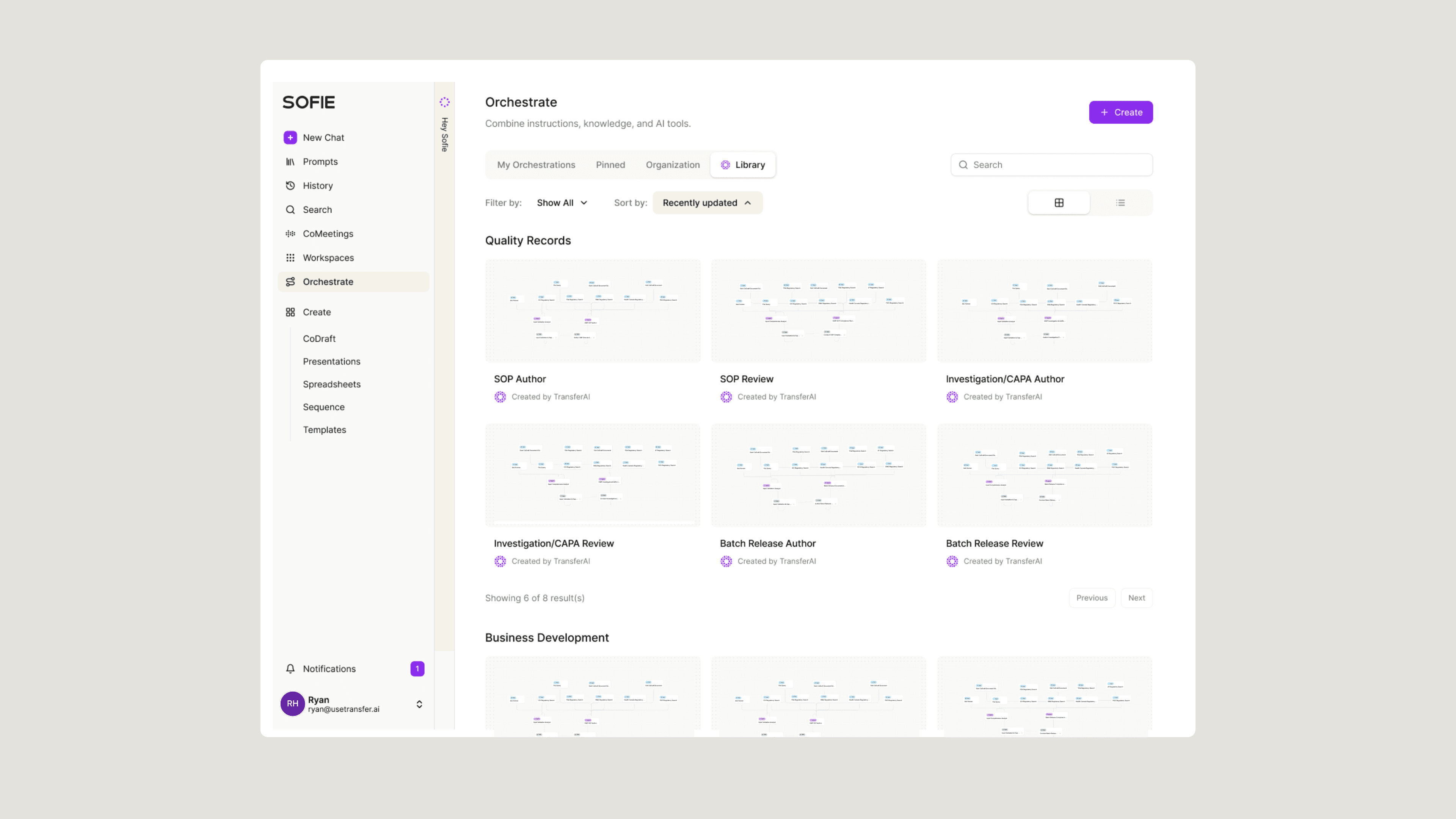
Sofie launches with 30+ pre-built orchestrations designed for the workflows biopharma teams run every day. Each one is a multi-step, multi-agent workflow that executes autonomously against a defined objective, with human oversight built in at the decision points that matter. For our team, this number matters because of what it represents: we studied how technical operations teams actually work, and we built the workflows to match.
Intuitively Build Custom Orchestrations
Sofie's prebuilt orchestrations cover a number of workflows, but every organization has processes specific to how they operate. That's a strength, not a limitation. Teams can clone a prebuilt orchestration and run it as is, dropping in their own inputs without changing a thing. Or customize the orchestration to better fit their specific workflows, outputs, and templates. For teams with highly specific processes, Sofie also allows them to build an orchestration from scratch. Every run prompts users to connect orchestrations to workspace files and governing documents so Sofie always aligns with how your team works end-to-end.
The hardest part of building a custom orchestration isn't the configuration, it's the architecture. Knowing which steps to include, in what order, and with what logic requires understanding the full scope of the workflow before any agents are assigned. Plan mode handles that upfront work.
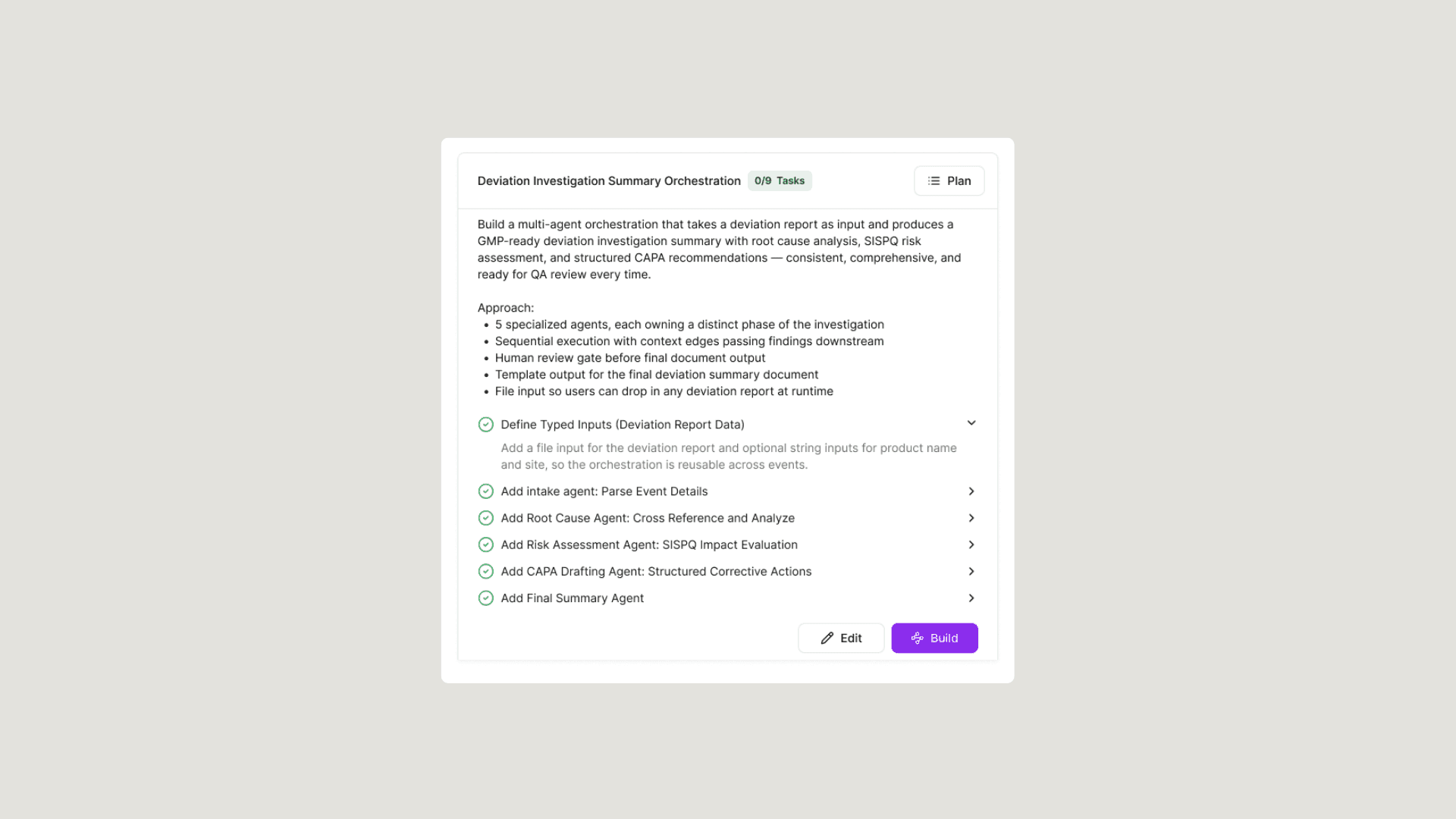
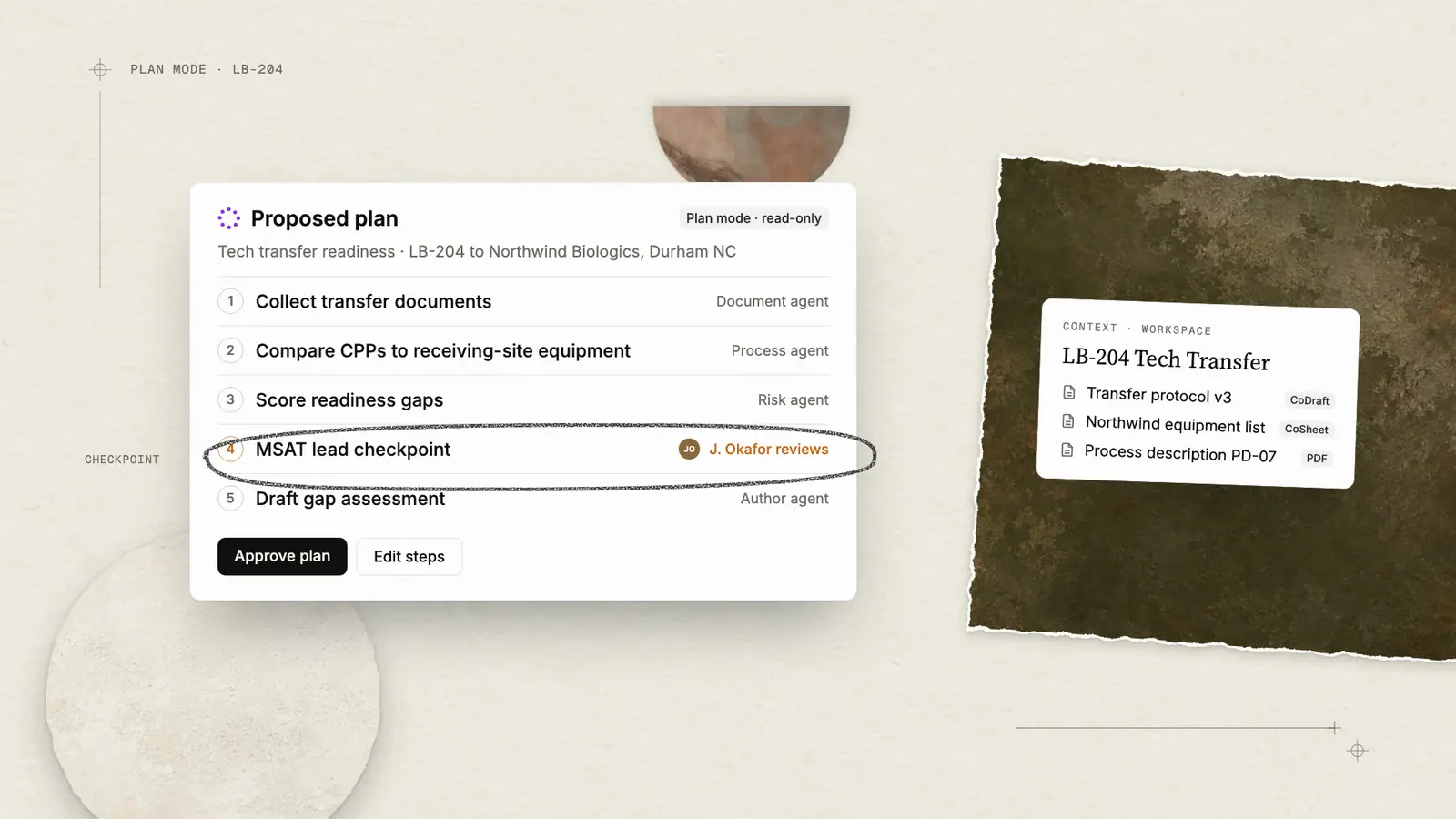
Before building begins, Sofie reviews your objective and proposes a step-by-step workflow structure for your team to confirm. It's a read-only planning phase where Sofie analyzes and designs and nothing is built until you approve the plan. From there, building a custom orchestration comes down to three decisions:
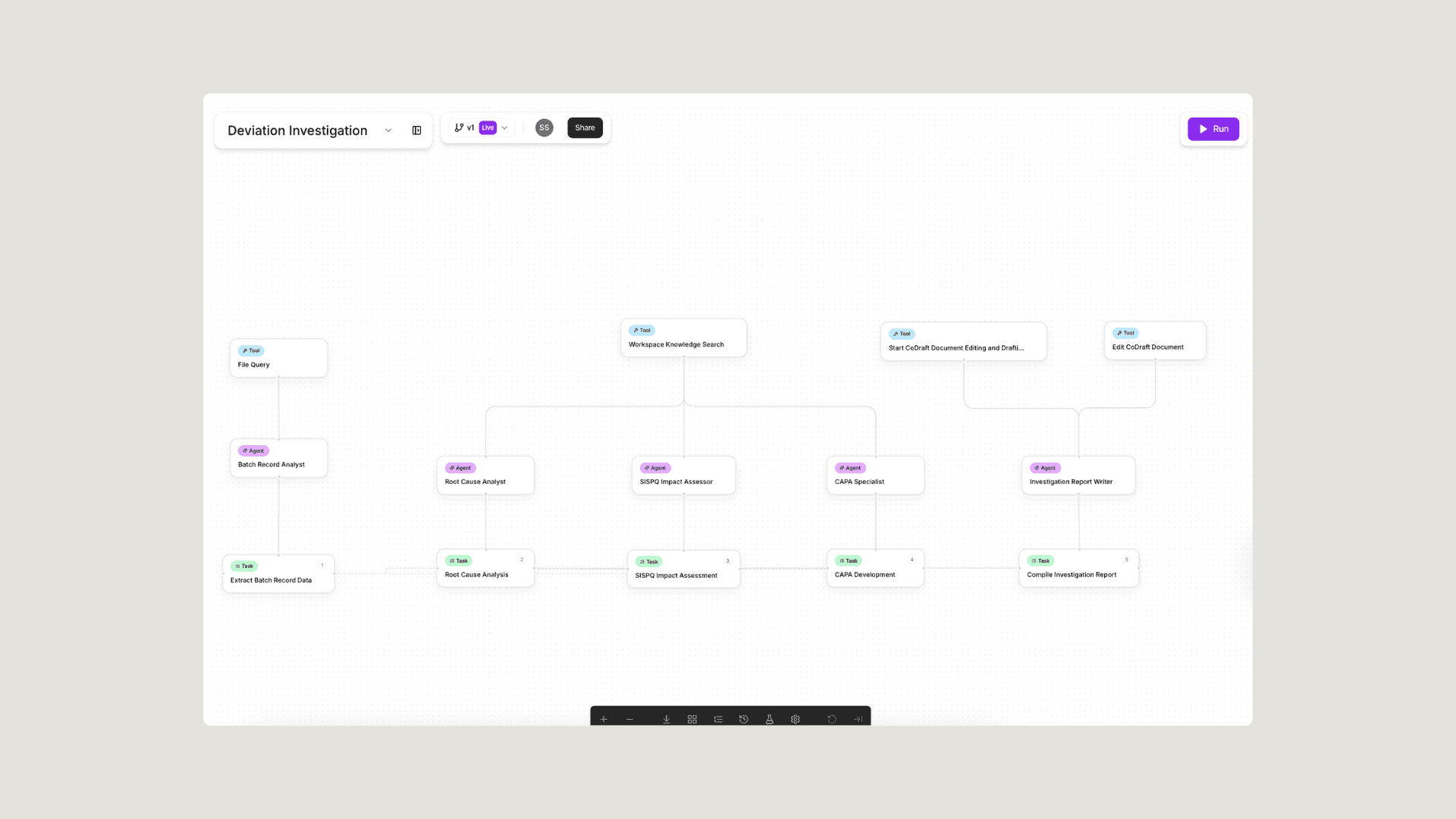
- Design your workflow. Defining the steps your workflow requires is foundational to any orchestration, and also one of the most time-intensive parts of creating one. Each step is handled by a specialized agent, and context carries forward in sequence from one agent to the next. This step helps teams design a clear sequence and ensure a solid foundation for each output.
- Set human checkpoints where they matter most. Teams decide where human judgment matters, whether that's reviewing an analysis before it informs the next step or approving a draft before it's finalized. Orchestrations execute between checkpoints, but the decisions that carry risk stay with your team.
- Pull in relevant context. Orchestrations are only as strong as the context they pull from. Teams connect orchestrations to workspace files, governing SOPs, and custom templates so that every output reflects your organization's standards and source material, not generic defaults.
Once an orchestration is built, it doesn't sit idle. The highest-value orchestrations are the ones your team runs again and again. A deviation investigation follows the same logical sequence whether it's triggered by an environmental excursion or a process parameter drift. A batch release review pulls the same categories of data and applies the same quality criteria regardless of the product.
Save Time with Orchestrations
Most AI platforms ship a general-purpose assistant and leave teams to figure out the workflows on their own. Every pre-built orchestration in Sofie was built for a specific job in biopharma operations so the workflow your team needs already exists, already knows the domain, and is already ready to run.
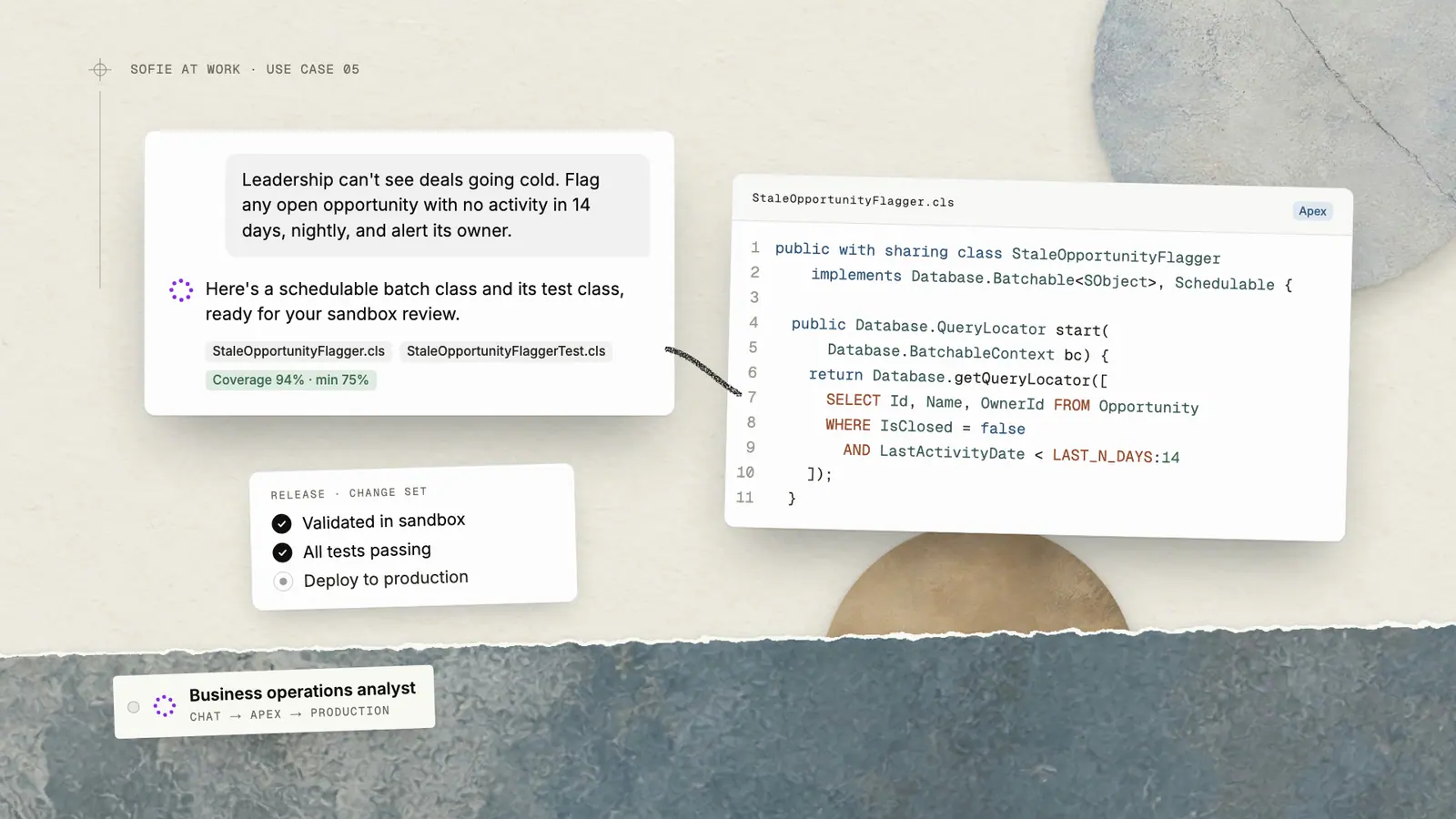
For example, CDMOs can streamline deviation investigations with automated root cause analysis, generate formatted batch record summaries for QA review, and share standardized orchestrations across client programs to ensure consistency at scale.
Consultants and service providers can turn client-facing deliverables like gap analyses, site readiness assessments, and validation protocols into repeatable orchestrations that deploy across each new engagement without rebuilding the workflow from scratch.
We've built complete orchestrations that span the work across quality, manufacturing, regulatory, and technical operations. We're excited to see how teams save time and scale their impact by adopting orchestrations across their organizations.
A few examples of what this looks like in practice:
- Quality Investigations: Reduce investigation cycle time from batch record review to completed report, with root cause analysis and risk flags surfaced for human review.
- Tech Transfer Assessments: Identify readiness gaps earlier by comparing process parameters across sites and producing a structured gap assessment.
- Regulatory Response Preparation: Accelerate agency response timelines by analyzing questions against submission history and drafting structured responses for team review.
- Client Deliverable Generation: Eliminate manual assembly by pulling project data into organizational standards and producing formatted deliverables ready for client review.
- Risk Assessments: Surface mitigation requirements faster by scoring process risks against defined methodologies and populating structured risk matrices.
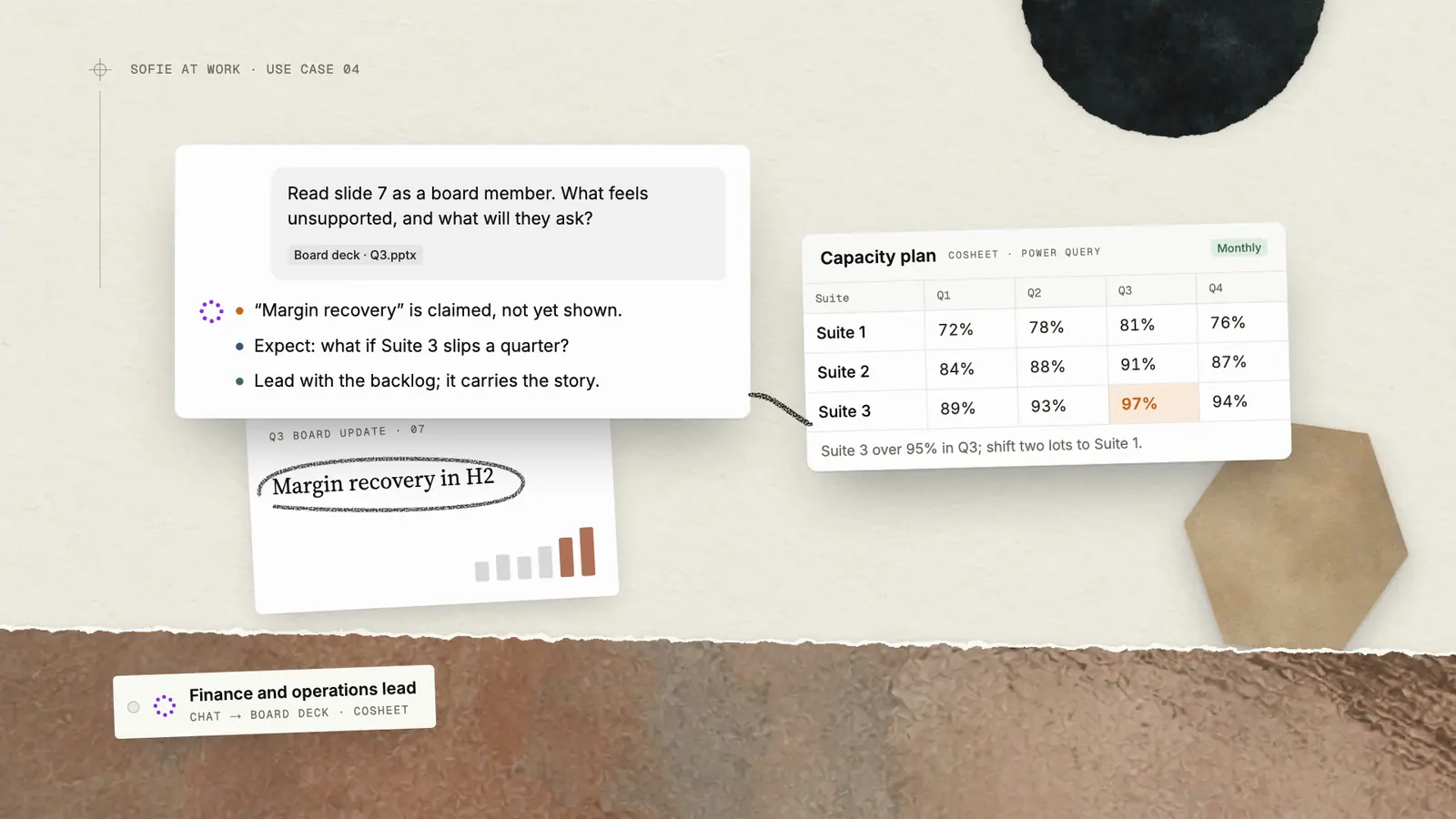
Across all facets of biopharma operations, agentic orchestrations help teams streamline consuming, repetitive work so they can focus on the analysis and decisions that drive outcomes.
Moving Projects Forward, Faster
Orchestrations don't just execute workflows, they compound knowledge. Every time a team runs an orchestration, refines the sequence, adjusts a checkpoint, or sharpens the output, that improvement carries forward to every future run. What starts as a single deviation investigation workflow quietly becomes a battle-tested process that reflects how your organization actually resolves deviations, not how a template assumed it would. And because those refinements persist, the orchestration steadily absorbs the judgment calls your most experienced operators make, the document standards your quality team enforces, the review logic your regulatory leads apply. Over time, it becomes organizational intelligence: encoded, repeatable, and transferable. That's the real gain. Any team member can run the same workflow and produce output at the same standard.
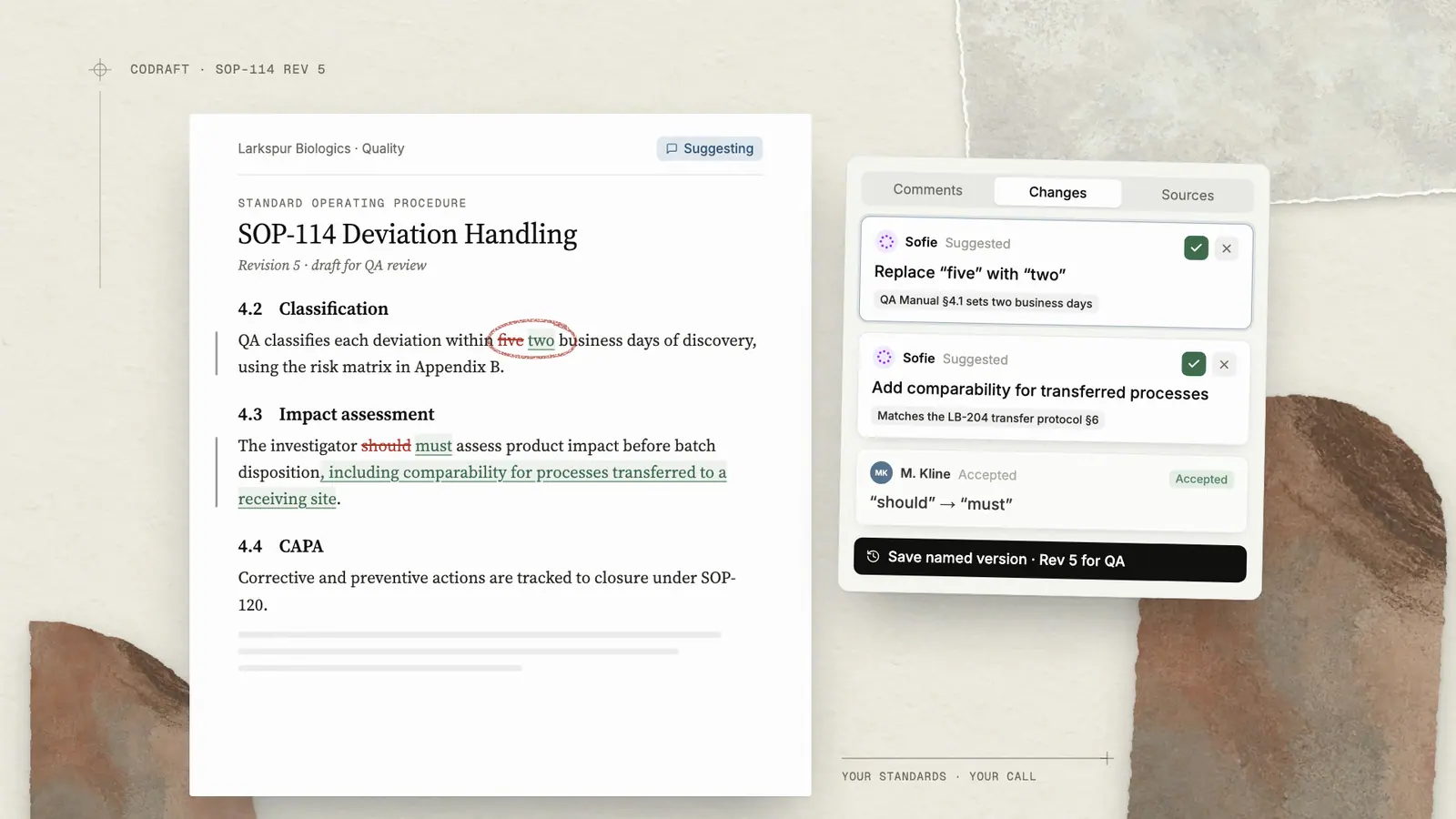
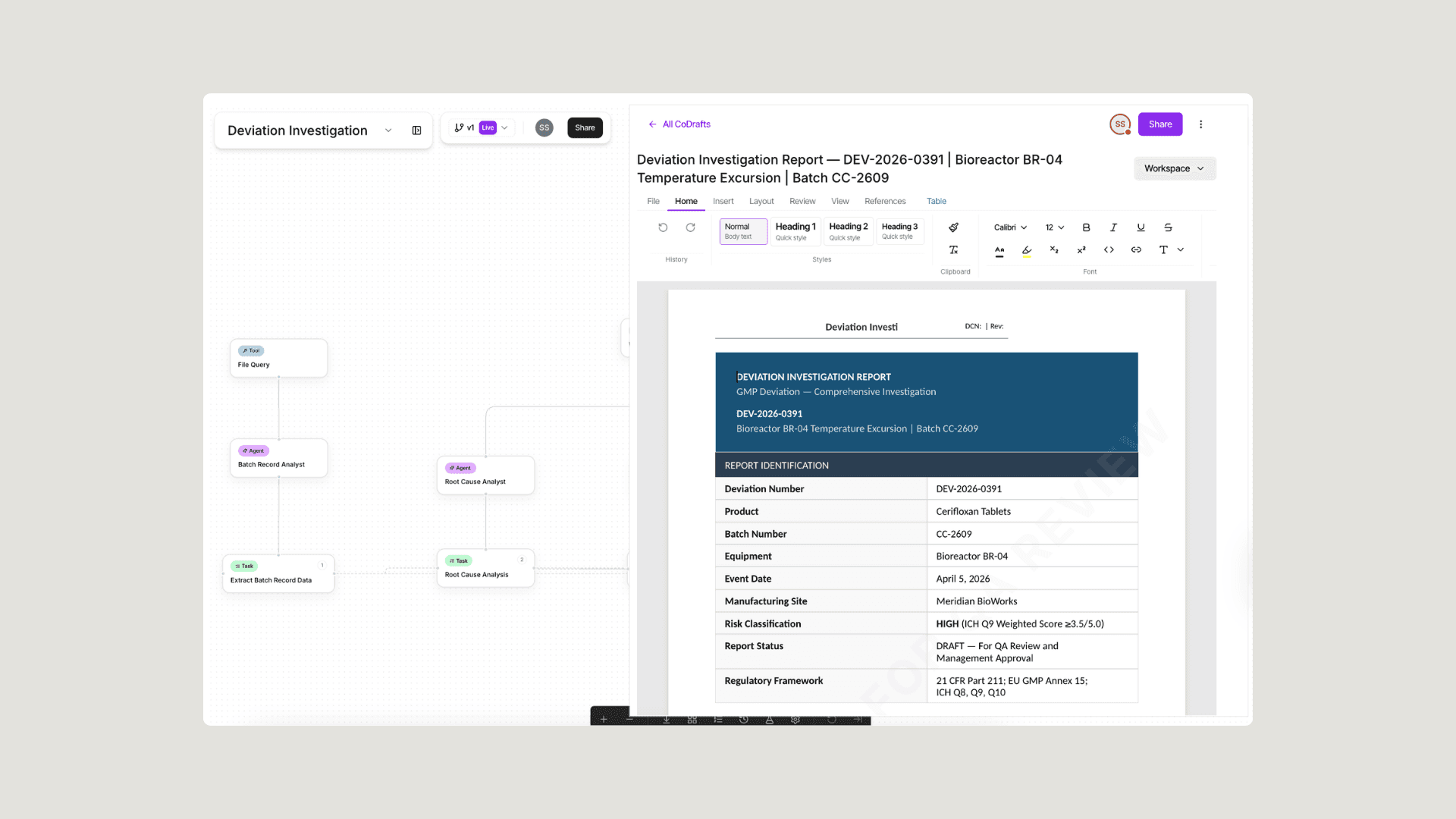
That continuity extends across the entire platform. An orchestration pulls context from your workspace, executes a multi-step analysis, and outputs a finished document into a structured CoDraft template, all in a single flow. No switching tools, no reformatting, no assembling sections from five different sources. For teams managing multiple products, sites, or client programs, this is where the leverage shows. Build the orchestration once. Run it across every deviation, every transfer, every regulatory response, and more. The workflow stays consistent, the quality stays high, and your team reclaims the hours that belong to real technical judgment.
If you want a fresh set of high-impact ideas tailored to your use of Sofie, request a 1:1.
Insights
All insights